Refrigerator Not Cooling in St. Augustine Beach
The fridge is running — or sounds like it is — but the food inside is warm. This is the single most common refrigerator call there is, and most causes are fixable in one visit.
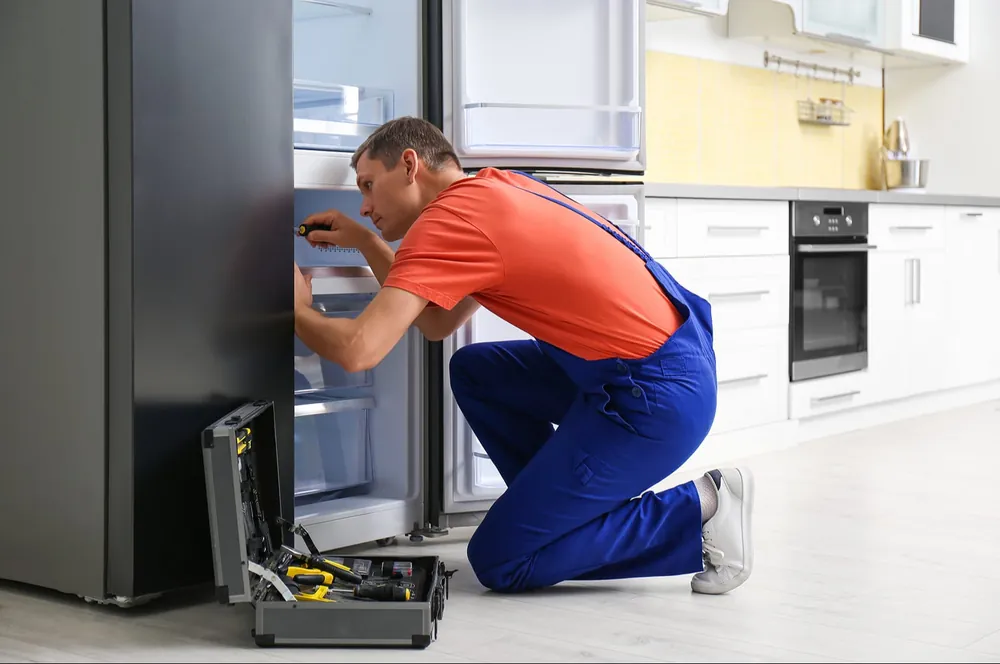
What's going on with your refrigerator
A refrigerator that stops cooling is working against the clock: most food stays safe only a few hours above 40°F. The good news is that 'not cooling' is a symptom, not a verdict — it can come from the airflow system, the defrost system, the controls, or the sealed refrigeration system, and three of those four are routine repairs. The diagnostic separates them in order, from the most common cause down.
St. Augustine Beach sits about 41 miles from Downtown Jacksonville, on the edge of the metro — covered by pros who run the outlying suburbs as part of their regular rounds.
How urgent is it? Treat this as fast urgent: once the fresh-food section passes 40°F, dairy, meat and leftovers are on a short clock. Call early in the day and a fix is usually a single visit.
What causes refrigerator not cooling
Every one of these is found by testing, not guessing — the diagnostic confirms which one you have before any part is quoted.
What you can safely check yourself
- Check the temperature settings — the fridge should be near 37°F and the freezer near 0°F; settings get bumped by groceries more often than you'd think.
- Make sure vents inside the back wall aren't blocked by food packaging, and that both doors close fully and seal.
- Look at the freezer back panel: heavy white frost on it points at a defrost problem worth mentioning when you call.
- If food is already warm, move perishables to a cooler with ice — and don't restart the fridge repeatedly; note any clicking sounds instead.
What a technician checks
The technician works the cooling chain in order: compressor start and amp draw, condenser airflow, evaporator fan operation, then the defrost system — heater continuity, defrost thermostat, and board timing. Each component is proven with a meter before it's condemned, because several different failures produce the same 'warm fridge' complaint. If the sealed system is suspect, pressures confirm it before anyone talks about compressors.
Parts most often involved in this repair: start relays, evaporator fan motors, defrost heaters and thermostats, condenser fan motors, temperature controls and main control boards. Each is identified against your exact model number — no universal substitutes.
How it works: call the number on this page and describe what’s wrong. A local appliance repair professional who covers your area answers, runs the appliance, tests the systems the symptom points to, identifies the failed part by model number, and quotes one total for the complete repair — before starting. You decide with the full price in front of you.
Refrigerator Not Cooling in St. Augustine Beach — questions
Why is my refrigerator not cooling but the freezer is cold?
That pattern almost always means cold air isn't moving, not that it isn't being made: a failed evaporator fan, a frosted-over coil blocking airflow, or a stuck damper between the sections. All three are standard, fast repairs.
Is a warm refrigerator worth repairing, or should I replace it?
If the compressor and sealed system are healthy, the repair is normally a fraction of a comparable new fridge. If the compressor itself has failed on an older unit, the technician will lay out both numbers at the diagnostic and let you decide — before you spend anything beyond it
How long does a not-cooling repair take?
Fans, relays and defrost components typically take 45 to 90 minutes once the failed part is identified. Common parts ride on the truck; model-specific ones are checked against live local supplier stock during the visit.
Refrigerator repair in St. Augustine Beach
This problem in nearby areas
More refrigerator problems in St. Augustine Beach
Refrigerator error codes in St. Augustine Beach
Not in St. Augustine Beach? Read the general guide: Refrigerator Not Cooling · All appliance problems & error codes · See every neighborhood in the service area
Get a quote for refrigerator repair in St. Augustine Beach
Call to get a quote — describe the appliance and the problem, and a local pro who covers your neighborhood will go over timing and price with you directly.
Prefer to read first? Browse the problem guides — causes, safe checks, and the parts usually involved.
Get a quote from a local pro
Call the number below and describe the appliance and the problem. A local appliance repair professional who covers your neighborhood answers — the pro goes over timing and price with you directly, and quotes the full repair before any work starts.
How it works
1. Call and describe what's wrong.
2. Get connected with a local pro who covers your area.
3. The pro diagnoses, quotes the full repair up front, and fixes it on your go-ahead.
Prefer to read first? Browse the problem guides — causes, safe checks, and the parts usually involved.