Refrigerator Ice Maker Not Working in Orange Park
No ice, slow ice, small cubes or a maker that's stopped mid-cycle. Ice makers fail in ordinary ways — water supply, temperature, or the maker mechanism itself — and the diagnostic untangles which.
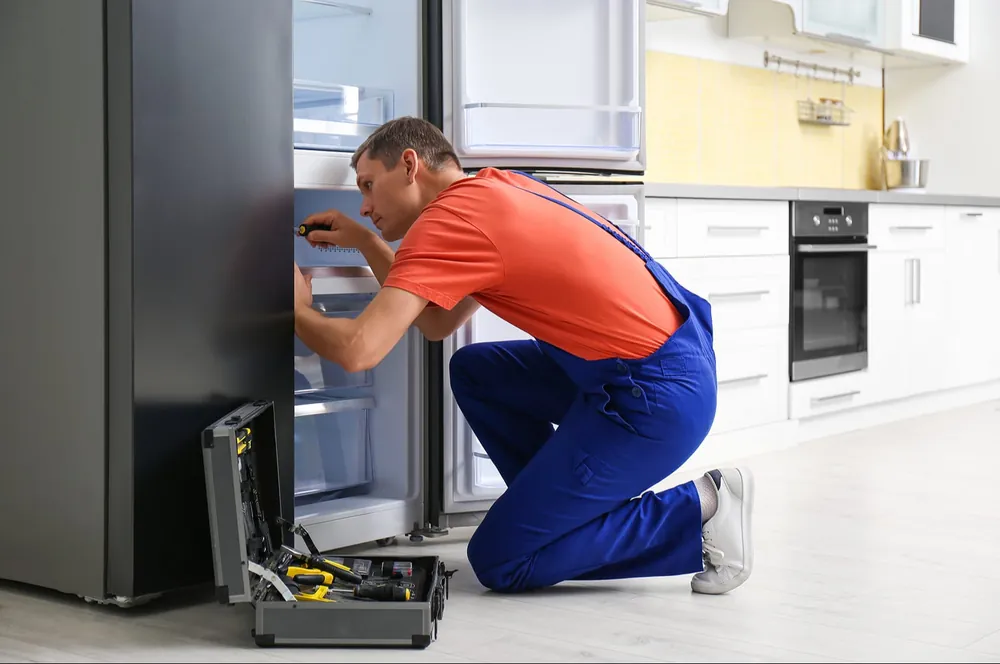
What's going on with your refrigerator
An ice maker is a small factory with three dependencies: it needs water delivered at the right moment, a freezer cold enough to freeze it (below about 10°F), and its own motor and mold working through the cycle. When production stops, one of the three has failed — and each has a different fix. Ice-maker problems are also one of the most common reasons a refrigerator 'isn't cooling': a warm freezer stops ice long before food feels warm.
Orange Park sits about 13 miles from Downtown Jacksonville, part of the wider metro — pros based across the city cover it on their regular rounds.
How urgent is it? Not an emergency for the refrigerator itself — but if the freezer is also warm, treat it as a cooling problem and book that day. Ice alone can wait for a convenient slot.
What causes refrigerator ice maker not working
Every one of these is found by testing, not guessing — the diagnostic confirms which one you have before any part is quoted.
What you can safely check yourself
- Make sure the ice maker is switched on and the shutoff arm (if yours has one) is down.
- Check the freezer temperature with a thermometer — if it's above 10°F, the ice problem may really be a cooling problem.
- If the water dispenser is also slow or weak, suspect the filter or water supply before the maker itself.
- Look for ice frozen in the fill tube at the back of the freezer — a visible plug of ice is a classic clue.
What a technician checks
The technician tests the maker as a system: jumper-cycling the module to watch it call for water, testing the valve's solenoids electrically, checking line pressure and the freezer's actual temperature. The failed link — supply, temperature or mechanism — is proven before parts are ordered, because replacing the maker when the valve is dead buys you the same empty bin.
Parts most often involved in this repair: ice maker assemblies, water inlet valves, fill tubes, water filters and freezer fan motors. Each is identified against your exact model number — no universal substitutes.
How it works: call the number on this page and describe what’s wrong. A local appliance repair professional who covers your area answers, runs the appliance, tests the systems the symptom points to, identifies the failed part by model number, and quotes one total for the complete repair — before starting. You decide with the full price in front of you.
Refrigerator Ice Maker Not Working in Orange Park — questions
Why did my ice maker suddenly stop making ice?
Sudden stops are usually electrical or mechanical: a dead inlet valve, a stalled maker motor, or a frozen fill line. Gradual slowdowns point more at temperature, filters or water pressure.
Should I replace the ice maker or repair it?
Most ice makers are serviced as a complete assembly — internal gears and motors aren't sold separately. If the maker itself is proven failed, a new assembly is the standard, reliable fix; if the valve or line is at fault, the maker stays.
How cold does the freezer need to be for ice?
The maker typically won't cycle until the mold is below about 10°F, and production is healthiest at 0°F. A freezer running warm explains an ice maker that 'just quit'.
Refrigerator repair in Orange Park
This problem in nearby areas
More refrigerator problems in Orange Park
Refrigerator error codes in Orange Park
Not in Orange Park? Read the general guide: Refrigerator Ice Maker Not Working · All appliance problems & error codes · See every neighborhood in the service area
Get a quote for refrigerator repair in Orange Park
Call to get a quote — describe the appliance and the problem, and a local pro who covers your neighborhood will go over timing and price with you directly.
Prefer to read first? Browse the problem guides — causes, safe checks, and the parts usually involved.
Get a quote from a local pro
Call the number below and describe the appliance and the problem. A local appliance repair professional who covers your neighborhood answers — the pro goes over timing and price with you directly, and quotes the full repair before any work starts.
How it works
1. Call and describe what's wrong.
2. Get connected with a local pro who covers your area.
3. The pro diagnoses, quotes the full repair up front, and fixes it on your go-ahead.
Prefer to read first? Browse the problem guides — causes, safe checks, and the parts usually involved.